Performing a Domain Registry Lookup: A Comprehensive Guide for 2026

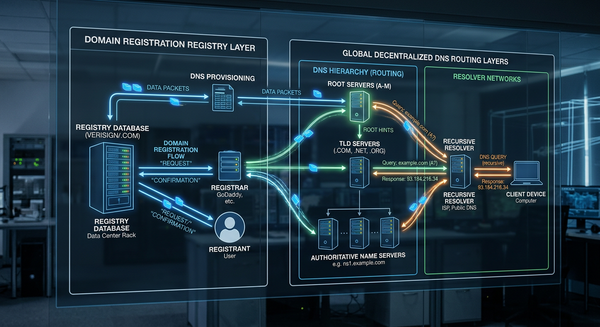
Understanding the foundational infrastructure of the internet requires looking beyond surface-level web browsing and examining the mechanics of the Domain Name System (DNS). At the heart of this system lies the TLD registry, the authoritative database responsible for managing every domain name within a specific top-level domain, such as .com, .org, or the specialized namespaces emerging from recent ICANN rounds. Professionals often need to perform a domain registry lookup to verify ownership, registration status, or technical contact details for specific digital assets.

Quick Summary
A domain registry lookup is the process of querying the authoritative database of a TLD registry to retrieve the current registration status, expiration dates, and administrative contacts of a domain name. This procedure is essential for verifying asset legitimacy, conducting due diligence for acquisitions, and maintaining secure domain portfolios.
- Access the TLD registry's official WHOIS portal.
- Input the target domain name into the registry's search interface.
- Review the technical, administrative, and registrant contact data.
- Verify the domain status codes to determine if the name is active or locked.
Table of Contents
- The Role of a TLD Registry
- Why Perform a Domain Registry Lookup
- Step-by-Step Guide: How to Execute a Lookup
- Interpreting Registry Domain Name Data
- Common Pitfalls and Troubleshooting
- FAQ
- Recommended Reads
The Role of a TLD Registry
A TLD registry acts as the authoritative source of truth for a specific namespace. It maintains the master database of all domain names registered under its extension. Registry domain name operations involve ensuring the uniqueness of registrations, managing zone files, and facilitating the distribution of domain names through an ecosystem of accredited registrars. These entities are the high-level infrastructure providers that keep the internet's naming system stable and scalable.
Beyond basic database maintenance, modern registry services handle the complexities of global policy enforcement, such as complying with ICANN mandates and managing domain lifecycle events like redemption periods and auction processes. For those interested in the operational mechanics of these systems, understanding how a registry interacts with the DNS root zone is vital for navigating the evolving digital landscape.
Why Perform a Domain Registry Lookup
Performing a domain registry lookup is a critical task for investors, legal teams, and technical administrators. By querying the authoritative registry directly, stakeholders can bypass potential inaccuracies often found in third-party databases. This information is essential when evaluating a namespace for purchase or investigating the origins of a specific web property.
Furthermore, accurate registry information provides visibility into the status of a domain, such as whether it is in a "ClientHold" state or near its expiration. For those focused on the strategic advisory aspects of domain investment, these lookups serve as a fundamental due diligence tool, ensuring that all data points are verified before committing capital to a domain acquisition.
Step-by-Step Guide: How to Execute a Lookup
To successfully perform a domain registry lookup, you must identify the specific registry governing the TLD in question. Follow these steps to ensure data integrity:
- Identify the TLD: Determine the extension of the domain name (e.g., .com, .net, or new gTLDs). Each TLD is managed by a specific registry.
- Locate the Official Portal: Navigate to the official website of the registry. Most large-scale registries provide a public-facing WHOIS portal.
- Enter the Domain Name: Input the full domain name into the search bar. Use only the domain string without the 'http' or 'www' prefixes.
- Analyze the Output: The registry will return a formatted record containing the creation date, registrar of record, and current status codes.
Pro Tip: If the public web portal is unavailable, use the command line 'whois' tool or 'rdap' (Registration Data Access Protocol) for faster, machine-readable results directly from the registry's server.
Interpreting Registry Domain Name Data
Understanding the output of a domain registry lookup requires familiarity with standard status codes. Common status codes like 'serverTransferProhibited' or 'clientUpdateProhibited' indicate that a domain is locked for security, preventing unauthorized changes. These codes are managed by the registry to protect the integrity of the domain asset.
Additionally, pay close attention to the 'Registrar' field and the 'Expiration Date'. If a domain is approaching its expiration, it may transition into a 'RedemptionPeriod' or 'PendingDelete' state. Accessing this data directly from the registry is the most reliable way to assess the health of the domain and its potential availability for future acquisition.
Common Pitfalls and Troubleshooting
One common error is relying on aggregated WHOIS databases that have not been updated in real-time. These services may display stale data, leading to incorrect assumptions about a domain's availability or status. Always default to the authoritative registry's direct output whenever high-stakes financial decisions are involved.
Another issue arises when a TLD registry employs a Privacy Proxy service, which masks the registrant's identity. While this is standard for privacy protection, it can frustrate investigators. In such cases, contact the registrar listed in the registry records to initiate a formal inquiry, provided you have a valid legal or administrative basis for doing so.
FAQ
What is the difference between a registrar and a TLD registry?
A registry is the database owner and manager of a TLD, while a registrar is the entity that sells domain names to the public and manages the relationship with the end user.
Is a domain registry lookup always free?
Yes, the basic WHOIS lookups provided by registries are public services mandated by ICANN and are free to access for the general public.
Why does some domain information show as 'hidden'?
Information is often hidden to protect the registrant's privacy, in compliance with data protection regulations like GDPR. Only the registry or registrar can provide further details if a legal request is made.
How often is domain registry information updated?
Registry data is updated in real-time. As soon as a domain registration, update, or deletion occurs, the registry database reflects these changes immediately.